.avif)
In many organizations, physical processes still operate without real control: deliveries that depend on people, collections without traceability, exchanges that require manual coordination. The issue is not moving objects — it’s the lack of visibility and control over what actually happens.
For years, solutions like Smart Lockers have attempted to address this. But they have often been deployed as isolated components. And that is precisely the limitation. A locker on its own does not structure operations nor connect systems.
The shift happens when we stop thinking in terms of devices and start thinking in systems. In this context, Columat positions itself as an intelligent ecosystem for delivery, collection, exchange, returns, and storage — capable of transforming physical processes into structured and manageable digital flows.
Within this ecosystem, Smart Lockers evolve from simple containers into execution points. They are where the physical interaction takes place, but fully integrated into a system that structures and controls it.
The hardware adapts to both environment and operational needs. In spaces where experience and integration matter, wooden lockers blend naturally into their surroundings. In more demanding environments, steel lockers — both indoor and outdoor — ensure durability and reliability.
This adaptability also responds to what is being managed. Temperature control enables operations with sensitive goods in sectors such as retail or healthcare, while charging capabilities transform lockers into points where devices are not just stored, but prepared for use.
More than a variety of formats, the hardware follows a single logic: to integrate seamlessly into real operations and turn every interaction into part of a structured system.
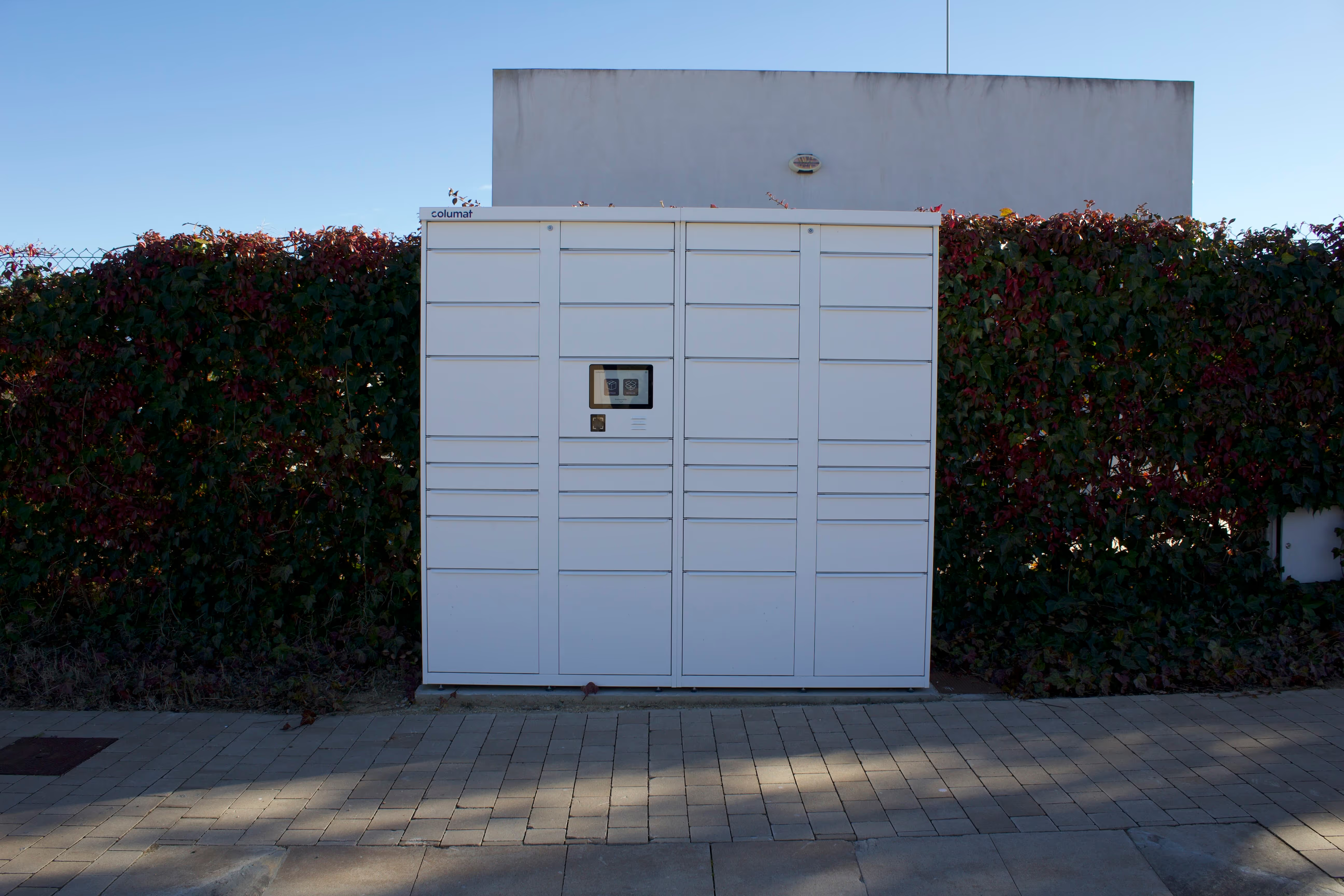
The real shift happens at the software layer. Columat Manager does not simply monitor lockers — it transforms every physical interaction into a structured digital operation.
Deliveries, collections, and exchanges are no longer isolated events but managed flows. From a single platform, the entire network is centralized, providing real-time visibility, control, and analytical capabilities.
But the real value lies not only in visibility, but in structure. Processes stop depending on people and become defined by rules and automations, eliminating manual tasks and ensuring consistency.
Furthermore, integration with systems such as ERP, WMS, or e-commerce platforms allows digital events to automatically trigger physical actions. Operations are no longer managed — they are executed.
%20-%20Editado.avif)
The real challenge lies in how technology integrates into day-to-day operations, with all their complexities, exceptions, and constant evolution. At this stage, Operational Services become a key part of the ecosystem, bridging technology and business reality and ensuring that the system works under real conditions from day one.
From the earliest stages, the system is designed based on the client’s operational flows, aligning the solution with their day-to-day activities. From there, implementation evolves into continuous support, where 24/7 assistance, incident management, and active monitoring ensure operational stability and continuity.
This support goes beyond maintenance. Usage analysis and continuous optimization allow the system to evolve alongside the organization, adapting to new needs and contexts.
In this way, the solution becomes a living system — continuously managed, continuously improving, and delivering sustained value over time.
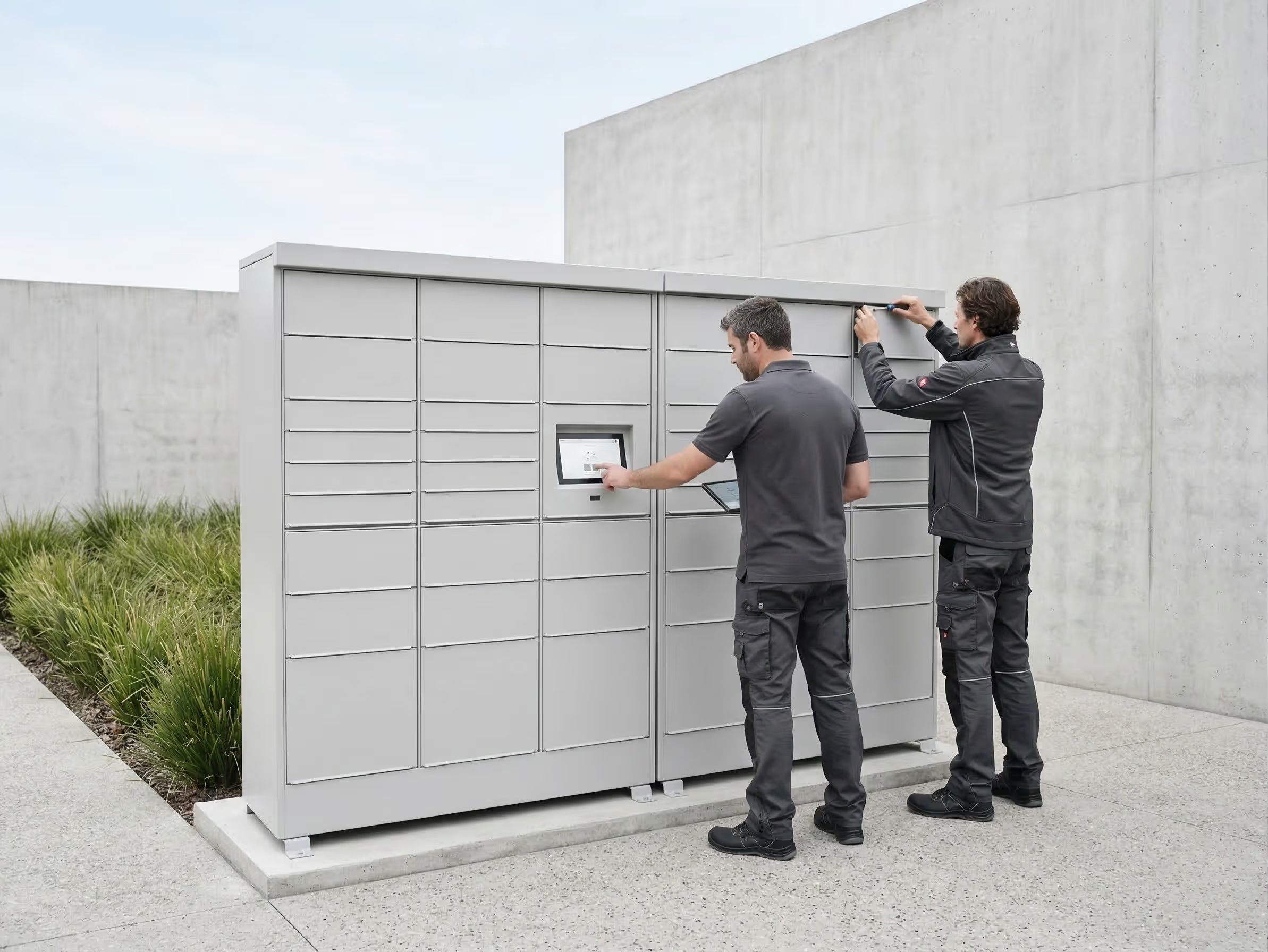
When hardware, software, and services operate as a unified system, physical processes move from disorder to structure. They become measurable, automatable, and scalable.
At the same time, the ecosystem integrates with existing systems, enabling physical processes to respond automatically to digital events. This removes manual coordination and turns operations into a continuous flow.
Organizations that see lockers as delivery points solve a specific need. Those that understand the ecosystem transform their operations. They gain control where there was uncertainty, and efficiency where there was friction.
Because ultimately, it’s not about where a delivery or collection happens.
It’s about whether you have control over that process.
And when that control exists, it stops being a point.
It becomes infrastructure.