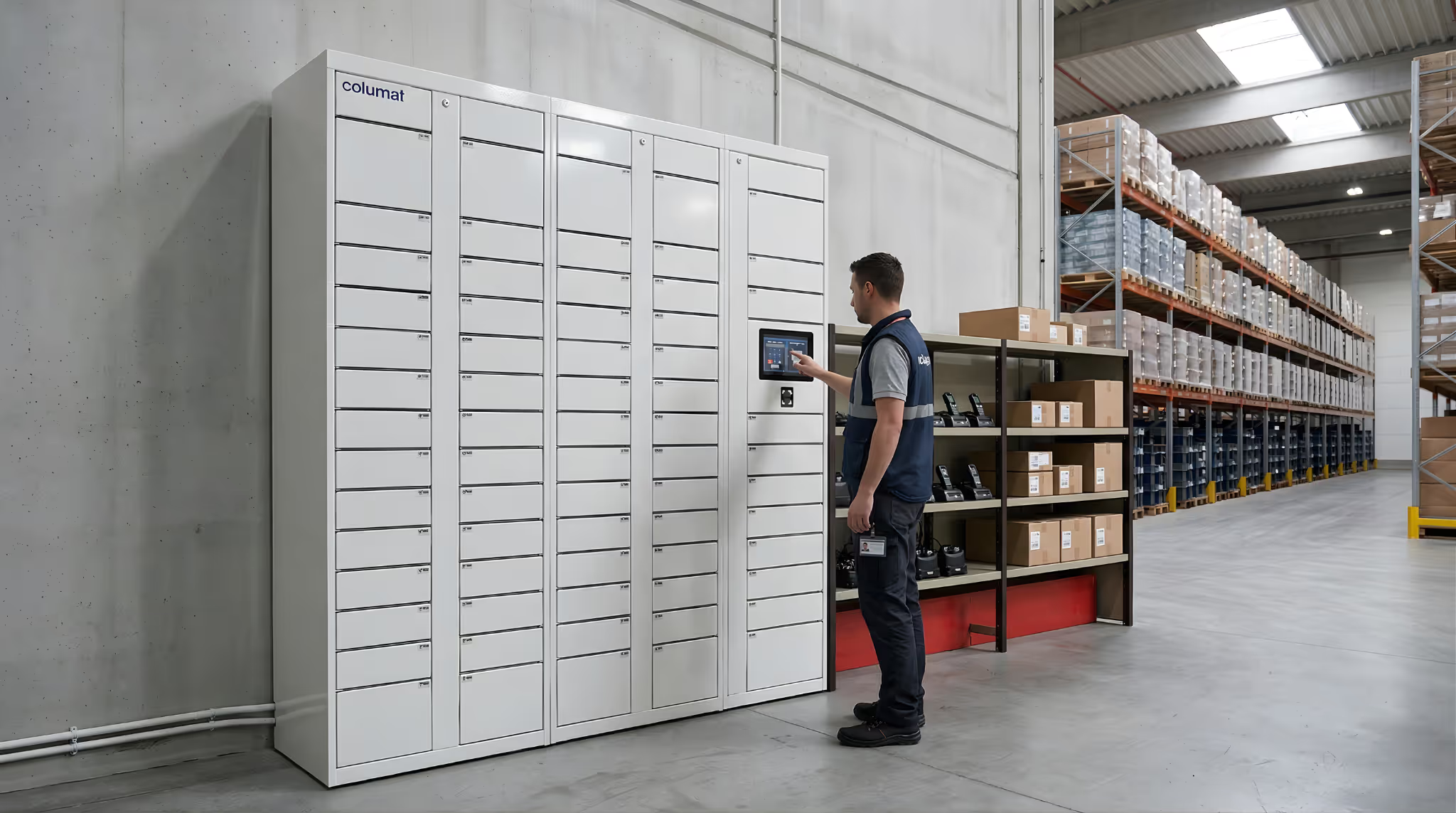
In an era of hyper-automation, European logistics hubs have invested billions in state-of-the-art Warehouse Management Systems (WMS) to monitor every gram of stock. However, a systemic paradox remains: companies know exactly where a 500 kg pallet is, yet they often lose track of the €600 PDA needed to scan it.
Misplacing a scanner or a safety vest isn't just an oversight; it’s a measurable financial drain. We have developed the "Physical Chaos Cost Index" (PCCI), a methodology to quantify five daily operational friction points that, combined, represent a significant hemorrhage of capital in industrial environments.
The first component of the PCCI is the disappearance of critical tools. Data shows that 65% of PDAs, scanners, and critical tools vanish or break without an identified responsible party. This "depersonalization" of assets forces companies into unnecessary over-purchasing to compensate for a lack of traceability, bloating fixed assets.
Chaos has a price per minute. Manual equipment handover during shift changes creates bottlenecks in 52% of cases. When an operator spends 15 minutes searching for a tool, the company pays a "chaos tax." Statistics indicate that up to 87% of operational time in asset management is lost when automation is absent.
A lack of automated logging breaks the chain of custody. Without knowing who has which device and for how long, accountability dissolves. This void makes locating equipment difficult and prevents optimized asset rotation, creating an artificial sense of scarcity caused by poor physical distribution.
A broken, unreported tool is a landmine for the next shift. In traditional setups, operators often return faulty material to the shelf without reporting it to avoid blame. The result is a "zombie asset"—it occupies space but remains unproductive, reducing fleet availability and causing frustration on the warehouse floor.
The final multiplier of chaos is poor charging management. 43% of devices arrive at the start of a shift without battery. The cost of a paid operator waiting for a tool to become functional is one of the most avoidable inefficiencies in modern intralogistics.
.avif)
The Physical Chaos Index cannot be solved by increasing staff, but rather through proprietary technology that serves as a bridge between the physical and digital worlds. Automating these processes allows for the elimination of up to 70% of operational costs associated with manual management.
This is where solutions like the Columat Ecosystem gain strategic importance. By integrating modular Smart Lockers with intelligent management software (Columat Manager), companies achieve 100% traceability.
From automated device charging to immediate incident reporting, the goal is to transform chaos into data, ensuring that every asset is ready, charged, and localized at the exact moment the operation requires it.