The European real estate market enters 2026 in a state of "pragmatic optimism." After a prolonged transitional period following the end of the low-interest-rate era, the industry is redefining its value proposition. In this new cycle, the value of an asset is no longer dictated solely by location or physical shell, but by its capacity to operate as a service platform integrated into a decarbonized, digital economy.
With the EMEA region leading the global recovery in real estate investment—projected to grow by 22% in 2026—capital is flowing selectively toward cities and sectors that offer liquidity, high-quality "Smart" infrastructure, and clear ESG compliance.
The European economy has proven resilient, with the Eurozone’s GDP growth projected to modestly accelerate in 2026. While global uncertainty persists, the stabilization of inflation near the 2% target has allowed the ECB to maintain a supportive monetary policy, fostering a gradual recovery in transaction volumes.
Institutional investors are increasingly favoring Operational Sectors—such as Student Housing, Data Centres, and Logistics—where income is driven by structural demand and professional management rather than passive land appreciation.
The "Experience Economy" has become the new currency of real estate. In a higher-cost environment, 72% of corporate real estate leaders now prioritize efficiency and budget optimization. This has birthed the "Building-as-a-Service" model, where amenities like automated logistics and digital concierge services are no longer optional "extras" but critical value drivers.
"Smart" certified buildings (such as those with SmartScore or LEED certifications) are seeing a clear financial "Green & Smart Premium":
Urban logistics across Europe is facing a "supply-demand imbalance" that is driving rental growth in key hubs. As e-commerce matures, the battle for the "last mile" has moved inside the building.
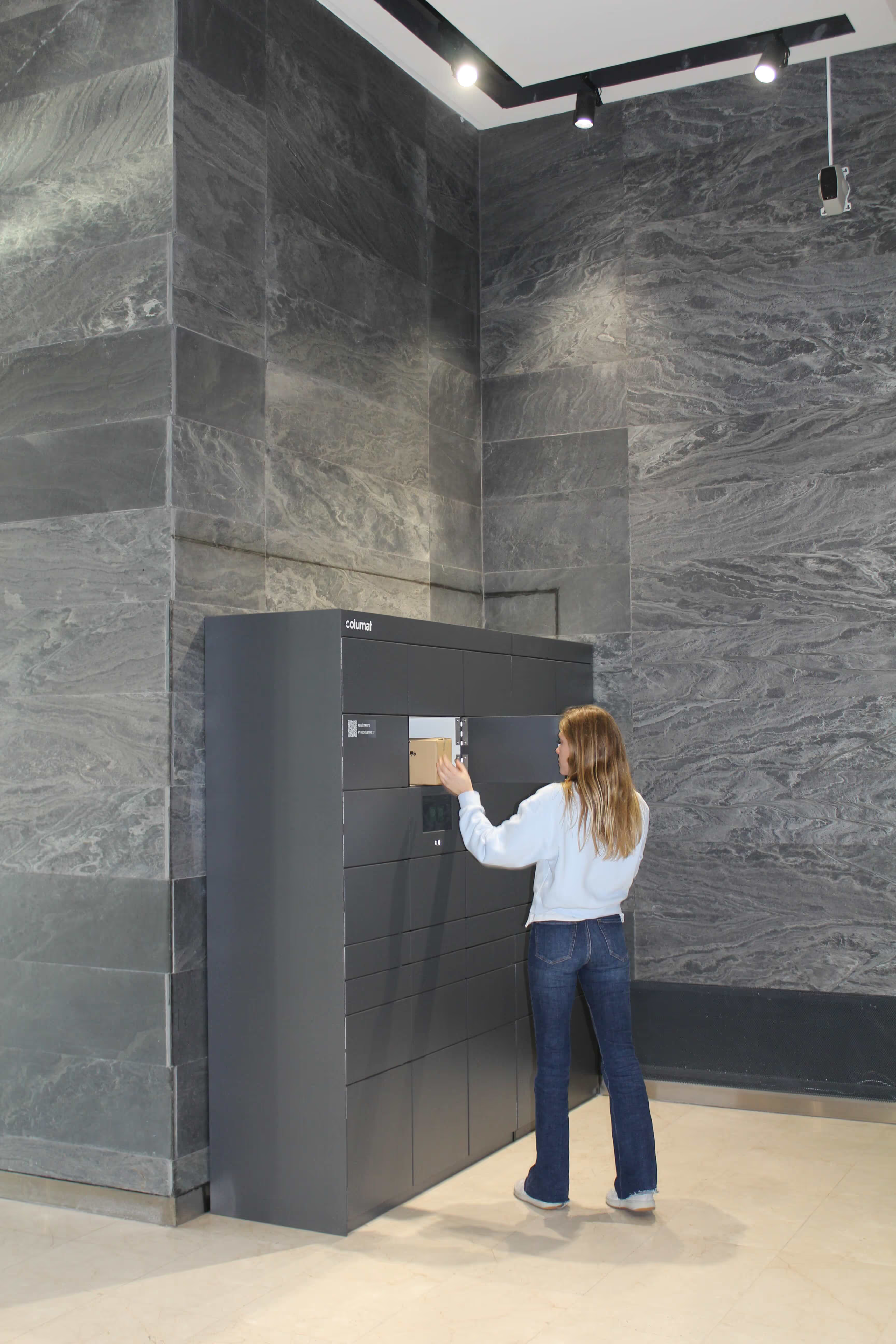
Traditional residential and office buildings were not designed to handle the current parcel influx—averaging 60 packages per 100 units daily. This creates operational bottlenecks and security risks. Smart Lockers have emerged as the standard infrastructure to solve this, offering:
The year 2026 marks the mandatory transposition deadline for the revised Energy Performance of Buildings Directive (EPBD) across all EU member states.
With 85% of EU buildings built before 2000 and 75% possessing poor energy performance, the "Stranded Asset" risk is now a primary concern for investors.
For Property Managers and Owners, the financial return on PropTech is increasingly transparent. Manual package management is a significant "silent cost":
In 2026, AI has moved beyond the "experimentation phase" and is now embedded in core real estate workflows.
The European Real Estate market of 2026 rewards assets that function as integrated ecosystems. Connectivity, sustainability, and operational efficiency are no longer "premium" features—they are the baseline for liquidity and survival in a competitive, high-cost environment.
By adopting infrastructure like Smart Lockers and AI-driven management systems, property owners can simultaneously address the "Triple Bottom Line": increasing ROI through labor savings, enhancing tenant experience, and achieving mandatory ESG and EPBD targets.