Sustainability and retailers
Sustainability must be included in the corporate and commercial DNA.
Do you know that in Spain 63% of the glaciers we had have disappeared, do you know that 20% more natural resources are extracted than can be generated or that 1 hour a day of telephone use generates an emission of 1,250 kg of CO2 per year? Among so many questions, you must have noticed a common point: the climate emergency.
The climate emergency that we are experiencing cries out for an increase in environmental awareness among the general population and organizations. Sustainability now occupies a large space among the values of society as well as corporate values; we would say that companies should incorporate it into the DNA of our business model.
It is adapt or disappear. Long-term adaptation. It is not enough with just a punctual action; sustainability must be implemented as a company value that is capable of establishing itself as a continuous strategy over time.
In recent years we have experienced a business activation around sustainability through the reorganization and redesign of business strategies related to environmental activism coming from consumers who are looking for companies with values aligned with their own.
Consumer preferences are changing. These new consumer habits are betting on the support of businesses that show transparent communication, and that support social and environmental initiatives. According to Kantar's Global Monitor, “85% of consumers value buying from companies that support causes they care about”. If we move to generation Z, (the youngest generation of consumers with which we companies coexist) 65% of them put sustainability as the epicenter of their purchases.
“85% of consumers value shopping at companies that support causes they care about.”
Is it enough to pay for plastic bags or change our branding for colors and materials associated with nature and sustainability? It is not just a matter of appearing sustainable, we must go further and be sustainable, looking for actions that directly affect the buyer, and create a positive impact.
Companies are joining the shift towards sustainability and many of them have rethought from their product catalog, opting for the offer of KM0 or ethical items, to other organizations that have opted for the search for new logistics channels that achieve a reduction in CO2 emissions.
E-commerce has been gradually gaining market share among retailers, going, in ten years, from representing 0.7% to 7.4% of sales made in Spain and with a growth forecast of 24% by the end of 2021, from this we see how businesses have decided to join the omnichannel to be closer to the consumer by opting for diversification of purchases. It is no longer only online or only physical, now they offer both options that can bring added value to their businesses.
The omnichannel revolutionizes the market by allowing consumers to shop from any location and at any time, but it can also offer sustainable solutions that allow a more efficient management of online purchases. We can achieve this through the implementation of collection points in our businesses creating a solid logistics strategy that improves both the internal management of the company, the relationship with consumers and a social improvement by being a sustainable alternative.
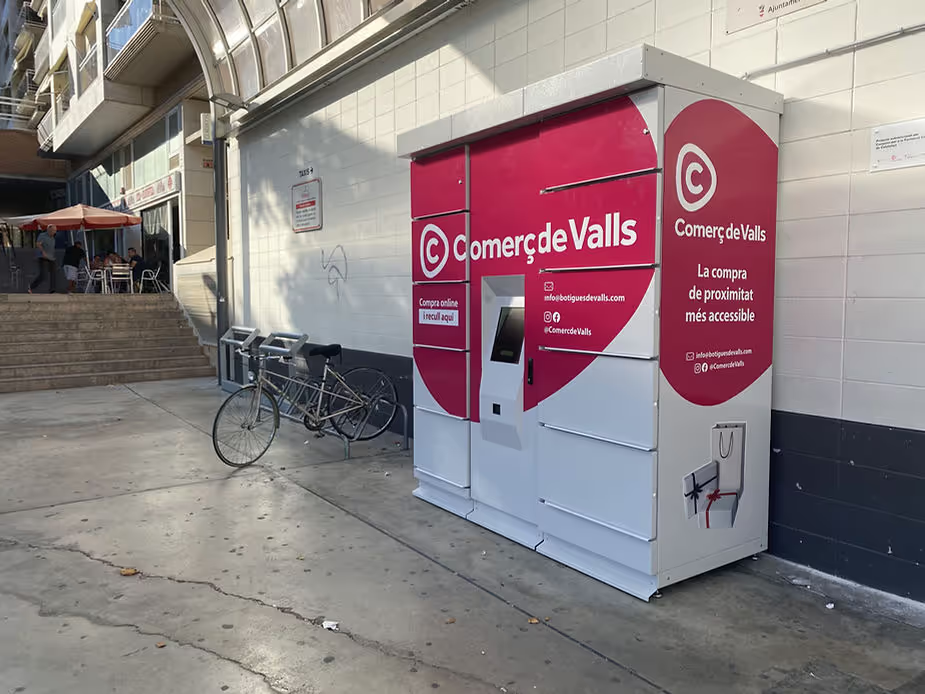
Smart lockers are gaining market share. According to DPDgroup's e-shopper Barometer study, 10% of European shoppers choose smart lockers as a way to receive their parcels. They are a delivery alternative that not only makes delivery easier for the consumer or provides more convenience and privacy, but also, on an environmental level, they are the most viable option for reducing up to 63% of the greenhouse gas emissions associated with shipping.
A simple solution that is growing in the market, it is increasingly common to find this service in Spanish businesses that join the search for efficient solutions that are able to offer a business, social and environmental improvement, where sustainability is not forgotten.